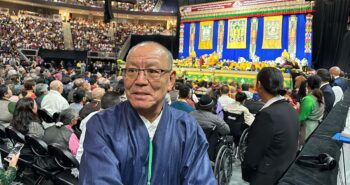
Yang Jisheng
Is it possible for a Tibetan living in the People’s Republic of China (PRC) to maintain their freedom after writing on aspects of Tibetan life in the PRC which challenge the accepted Party version of events? The case of the Tibetan monk known as Gartse Jigme, who recently received a five-year prison term for his writings on the situation in Tibet and the suffering of Tibetan people, is but the latest example that tells us the answer appears to be a clear “no,” but it is still worth revisiting some of the reasons why.
This question is prompted by a recent article from the Wall Street Journal (WSJ) on Chinese journalist turned historian Yang Jisheng, who is currently in New York to receive a prize for his heroic writing on the Great Famine that resulted from failed agricultural and economic reforms. From 1958-1961 Yang estimates that at least 36 million, including Yang’s own father, lost their lives due to unnatural causes, including starvation and the government’s murder of opponents of the reforms. (An excellent review of his book, ‘Tombstone,’ can be found here.)
The story of Yang Jisheng and how he was able to carry out such a project may not directly tell us much about Tibetans in China today, but it does provide us with another insight into how one is able to navigate the intellectual waters of China with a large degree of success (it should be noted that the Chinese edition of Yang Jisheng’s book, published in Hong Kong, is banned in the mainland.)
The WSJ article posits a few reasons for how Yang Jisheng has been able to write on this topic, including that the Party allows him to continue writing in order to help maintain some semblance of academic freedom in China.
It may also be that we are far enough removed from the time period of the Great Famine (1958-1961) that Party leaders today feel cushioned from such attempts at historical reckoning. In the end, though, the largest contributing factors may be his years as a Party member and senior editor with the state-run news agency, Xinhua, which have surely provided him with countless lessons on the written and unwritten rules regarding intellectual life in China, and the personal connections that can often mean the difference between being sentenced to prison and being allowed to travel abroad to receive an award for one’s writing. That Yang Jisheng is in New York to receive an award for ‘Tombstone’ surely speaks to this point.
With at least 117 Tibetans known to have self-immolated and the widespread security apparatus in place across Tibet, it is difficult to imagine a Tibetan in such a position to safely publish anything that deviates from the Party line. With this in mind it may seem astounding to note that what may be the most significant internal critique of the Party came from a Tibetan. In 1962 the 10th Panchen Lama submitted a 70,000 character report which extensively criticized Chinese policies in Tibet. Because of this internal report, which was never widely circulated, the Panchen Lama spent most of the next 14 years of his life in prison or under house arrest. No other Tibetan can be said to have attained the same level of political stature in Tibet or the People’s Republic of China since.
In the PRC the avenues for reaching (relative) political security run through the Party, and these have clearly been shut off to Tibetans. The systematic alienation of Tibetans from accepted politics may not be more acutely illustrated than by the fact that no Tibetan has ever been appointed to the role of Party Secretary in the Tibet Autonomous Region.
The 10th Panchen Lama’s report, described by Mao as “a poisoned arrow shot at the Party,” threatened the Beijing leadership not just because of the policy failures it exposed, but because it came from within. In retrospect we can see how dangerous this position was in the Maoist era. At the time of its writing the Panchen Lama held the position of vice chairman on the Chinese People’s Political Consultative Conference (CPPCC), a position of national stature. However, neither the Panchen Lama’s standing with the CPPCC nor his position as the most senior religious figure remaining in Tibet could protect him from political attacks. Yang Jisheng, too, would surely have faced severe punishment had he published his book only a few decades earlier, telling the WSJ, “I would have been executed if I had this book published 40 years ago.”
Today, however, the ‘Tombstone’ author remains free from prison and even house arrest, and we can look towards an ability to deftly maneuver the Party apparatus as a significant reason for this. In contrast, Tibetans are in no position to make any meaningful use of the political structure that exercises sovereignty over Tibetan areas. This is in no small way a direct result of non-democratic politics, but the Party also fundamentally distrusts Tibetans and treats them as spies for the “Dalai clique” and severely punishes them for even the mildest form of protest. The antagonistic relationship that exists elsewhere in China between the Party and the people takes on new form in Tibetans areas through the pursuit of ‘stability management’ policies, which have led to a widespread security crackdown across all Tibetan areas. The manufactured security threat posed by “splittists” and the “Dalai clique” belies a fundamental insecurity regarding Party’s own standing in Tibet and speaks directly to the failed attempt to incorporate Tibetans into the People’s Republic of China.
So long as the Party locks itself into this uniquely antagonistic relationship with Tibetans there will be no avenue for Tibetans to safely counter Party positions, let alone publish and travel abroad to receive awards for their work.

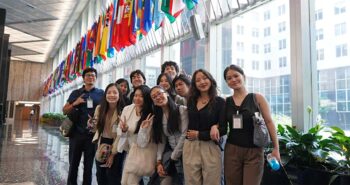
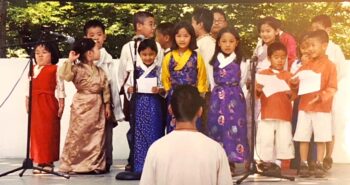
Tibetan Youth Leadership Program participants from 2001.
In the more than 10 years since then we have been able to host several subsequent groups of Tibetans in similar programs here in Washington, D.C. Also, ICT-Europe was also to organize a few such programs for Tibetan youth in Europe during the period. As much as the participants would have benefited from these, it was personally beneficial for someone like me to be connecting with the younger generation.
On account of some unavoidable factors, we were not able to organized the program for the past few years. Therefore, I am particularly looking forward to this year’s program. Many of the participants in our previous TYLPs are today holding responsible positions within the Tibetan community as well as in the broader American and European communities. They have indeed taken “leadership role” as envisaged in our initial objective.
Prior to 1990, the Tibetan population in the United States was comparatively small. The Congressionally-mandated immigration program for 1000 Tibetans that year led to an increase in the population subsequently. Even though, in terms of numbers, the Tibetan American population today is still small, compared to other immigrants, yet it has evolved into a critical mass and the Tibetans are in a position to take a more active and public role in the American political system. Within the Tibetan community, the young Tibetan Americans are better placed to take up this responsibility given their exposure to their broader American society.
A change in the mindset of the Tibetan Americans is also happening. Young Tibetan Americans have not only started to intern and work in Federal and state offices, but they are also beginning to be involved in American political campaigning. Socially, Tibetan Americans are increasingly recognizing their dual identity, a most conspicuous example is the singing of two national anthems — “The Star-Spangled Banner” and “Sishey Phendhey” — at community events. While on this, our brethren up north are also changing and it was a pleasure to hear them singing “O Canada” at an event that the Tibetan community in North America had for His Holiness the Dalai Lama some years back in Madison. As an aside, we did include Tibetan Canadians in our TYLP program one year.
On hindsight, our initial objective for the first TYLP in 2001 was conservative. We were only looking at the impact the individuals could have in the Tibetan community. It is our hope that through this program, the participants will learn about the tools they need to become a youth organizer who makes a difference in the American society. In the process, they can also channel their energy and convictions about issues affecting Tibet and turn them into a dynamic action.

Tapey, who self-immolated on February 27, 2009.
Rather than directing these questions to Party leaders in China, holding them to account for the conditions in Tibet today that have led to the self-immolations, another line of inquiry is often pursued which seeks to reconcile popular notions about the Dalai Lama and his relationship with the Tibetan people, with his perceived inaction regarding the self-immolations. This is usually articulated as some variant of, “why hasn’t the Dalai Lama condemned the self-immolations?” or simply, “why hasn’t the Dalai Lama put a stop to the self-immolations?” These questions are largely based on the assumption that it is possible for the Dalai Lama to issue a proclamation that would bring an end to the self-immolations – an assumption that on some level accepts that the Dalai Lama is allowing, or even in some way causing, the self-immolations to continue.
This sentiment was again raised in a recent blog-posting on the Council on Foreign Relations website which asked, “why hasn’t [the] Dalai Lama used his moral authority to issue a public statement asking for Tibetans to stop the practice?” The writer asserts that “[i]t is widely believed that self-immolation cases would drop significantly if he makes such a move.”
The Dalai Lama was asked a similar question in a recent interview, in which he in part replied that, “I have always seen myself as a spokesperson of the Tibetans, not their sovereign. These people are responsible and make their decisions independently. Unfortunately, I’m not in the position to offer them a concrete alternative.”
While the Dalai Lama is widely recognized as the most revered spiritual leader in Tibetan Buddhism, the manifestation of the Bodhisattva of Compassion whose teachings and words carry the highest religious and moral relevance to millions of people, and the national figure for a nation without a state, he is not a dictator, a monarch, or even a Chairman. While it is not always recognized by others, the Dalai Lama has made clear that his position is not absolute and is bound by limitations. This includes not exercising dominion over the Tibetan people.
In addition to these more pragmatic considerations, the Dalai Lama has made clear the ethical dilemma he faces when addressing the self-immolations. Speaking to Reuters last August, he stated, “I will not give encouragement to these acts, these drastic actions, but it is understandable and indeed very, very sad.” As the leader of the Tibetan people, the Dalai Lama must reconcile not encouraging the self-immolations with knowing that if he “say[s] something negative, then the family members of those people feel very sad. They sacrificed their own life. It is not easy.” It is with this in mind that the Dalai Lama concludes that “the best thing is to remain neutral.” (The Hindu, ‘Meaningful autonomy is the only realistic solution’)
It is deeply cynical to contend that the Dalai Lama has the power to halt the self-immolation protests by issuing a verbal proclamation, yet disavows that ability and allows them to continue, all the while acknowledging how tragic these acts are.
Beijing has not hesitated to indulge in this reasoning, often pointing to the absence of a condemnation by His Holiness as evidence that he is either secretly behind the self-immolation protests, or simply has no regard for human life. (It should not be lost that in raising these points, Beijing never directs their comments to the Dalai Lama himself. Presumably, that would be too close to a direct dialogue with the Tibetan spiritual leader.)
Whether it comes from the leadership in Beijing, a Western journalist, or a casual political observer learning of the self-immolations for the first time, searching for a solution to the self-immolations based on preconceived notions of the Dalai Lama’s authority over Tibetans obfuscates the Chinese government’s responsibility to investigate and address the self-immolation protests. This double-standard that seeks answers from Dalai Lama before the Party is not only due to recognition on some level that the Dalai Lama’s position with the Tibetan people is far greater than that of the Party’s, but because the Dalai Lama is accessible (to those outside of Tibet) and upholds democratic principles, neither of which can be said of the Party. It is the leadership in Beijing who claims to be the sovereign over all Tibetan areas and desperately seeks recognition of its legitimacy. And as things stand, it is to Beijing where the gaze of commentators and world leaders must turn in order to find an answer to the question of how to truly bring an end to the self-immolations.

The Sikyong with Senator Ben Cardin on the left and Senator Tim Kaine on the right.
Like previous visits, Sikyong Lobsang Sangay’s itinerary was full of meetings and opportunities for photos with elected officials. A full wrap-up of the details of his visit can be found on the Central Tibetan’s Administration website, Tibet.net.
Lobsang Sangay did three public speaking events, the webcasts of which are all available. The highlight was an event at the Council on Foreign Relations office in Washington. He was interviewed by Chinese law scholar Jerome Cohen and took questions from the audience. He also appeared on CPAN’s call in program, and was interviewed (in Tibetan) by the Voice of America’s Tibetan (Kunleng) and Chinese programs, as well as by Radio Free Asia Tibetan service.
As listed on Tibet.net, he met with several Members of Congress, including Senators John McCain (R-AZ), Ben Cardin (D-MD) and Tim Kaine (D-VA), House Democratic Leader Nancy Pelosi (D-CA), and Representatives George Miller (D-CA) and Jim McGovern (D-CA), and with Congressional staff members. According to the report, he “discussed a range of issues related to Tibet” and “made a case for why Tibet is important and requested support from the Congress.”
In addition, the Sikyong met with representatives of human rights organizations at a meeting hosted by the International Campaign for Tibet, and with other NGOs.
A window on his substantive agenda in DC can be discerned in an opinion piece published in The Hill, one of the daily trade papers circulated in and around Congress. Lobsang Sangay wrote:
I look to Congress for your continued support in advancing a peaceful solution to the Tibet question. It would be extremely helpful if Congressional foreign policy committees could hold hearings on Tibet. Congress has established several financial assistance programs for Tibetans and continued funding is vital. Lastly, I urge the U.S. Congress to further strengthen its efforts to encourage the Chinese government to enter into a meaningful dialogue to resolve the Tibet issue peacefully.
These points have long been the baseline of requests for Tibet, as evidenced in the work of the International Campaign for Tibet over 25 years. Continued Congressional support is extremely important in preventing the Tibet issue from being smothered by the weight of the complex U.S.-China relationship. The U.S. Congress was the first parliamentary body (in 1987) to give the Dalai Lama a forum to advance his peace plan. The several Tibet aid programs were designed not only to tangibly assist Tibetans, but also to elevate the Dalai Lama’s standing vis-à-vis the Chinese in his quest for a negotiated solution. And Congress’ effort to codify support for the dialogue (through the Tibetan Policy Act, which did other things) has served to solidify the Tibet issue, centered on dialogue, as a constant within the policy-making apparatus of the State Department.
The challenge for Sikyong Lobsang Sangay and the Tibetan leadership is to identify and execute the next step in advancing the Tibet issue within the current political circumstances. Amidst the political transitions in Beijing and Dharamsala, the self-immolations in Tibet, Beijing’s new global and regional assertiveness, and the reactions to the popular revolutions in the Middle East, the CTA’s foreign policy must be more than just to raise awareness. The challenge is how to harness diplomatic capital that can be invested in initiatives that move the ball forward with the Chinese.
While the Chinese government has the responsibility for conditions inside Tibet and thus for allowing for change, their frustrating intransigence has left little reason for the international community to look to Beijing for the next move (although governments must continue to push). Thus, it is a reality that the challenge falls on the Tibetans to come up with an innovative new idea on how to break through the current impasse.
Over the last two years, Sikyong Lobsang Sangay has explained in public the CTA’s fealty to the Middle Way approach and desire to resume dialogue with the Chinese – that they are ready “anywhere, anytime” talk and that they put “substance over process.” But it will soon be a year since the two envoys of His Holiness the Dalai Lama resigned without prospects for a new round of dialogue since the last in January 2010. At some point, diplomats in the capitals Lobsang Sangay visits will want to hear ideas for how he intends to advance this position, and how to overcome China’s refusal to deal directly with the CTA. Of course, he may already be sharing this in closed door-meetings.
This of course is a challenge to the entire Tibet movement. All of us — TSGs, academics, policy-makers, individuals — owe the Tibetans our best efforts to think and strategize on ways that we can help address the core issue. We can provide our counsel to the CTA. But in the end, it is on Sikyong Lobsang Sangay, the elected leader of an institution that is the legitimate representative of six million Tibetans, that falls the burden of deciding on the next step to take.
As an elected leader of an emerging democracy, and one who has taken on the label of the “political successor to the Dalai Lama,” Lobsang Sangay must speak to many audiences: his voting constituency in the diaspora, his non-voting constituency in Tibet, international government and media, the Indian government and media, and, perhaps most importantly, the Chinese people and the Chinese leadership. Complicating matters further, he must balance the roles as leader of a movement, who emphasizes unity, and the leader of a democracy, who must navigate diversity and criticism – a challenge he has readily acknowledged.
This is no small challenge, as was evidenced in his Council on Foreign Relations speech. Responding to a question about implementation of autonomy, he said, “we don’t challenge or ask for an overthrow of the Communist Party. So we don’t question or challenge the present structure of the ruling party.” The remark is clearly designed for the Chinese leadership, and is consistent with what the Dalai Lama has said and the negotiating strategy of his envoys as laid out in the Memorandum on Genuine Autonomy.
But it caused some heartburn among his Tibetan constituency, both inside and in exile, and the CTA issued a clarification.
Almost two years into his term, Sikyong Lobsang Sangay faces the overlapping tasks of advancing foreign and domestic policies with foreign and domestic audiences. Of course, this is a complexity that any head of government has to manage. His visits to Washington have shown that he has easily stepped into the cradle of Tibet support built up by those who came before him, and that he has the ears of policy-makers in Washington. The challenge now is to give these friends of Tibet an innovative initiative they can embrace and push forward to serve the fundamental goal of improving the lives of long-suffering Tibetans in Tibet.


Find Us Online