The news about the passing of Thambithurai Muthukumarasamy (commonly known as T. Kumar) on January 26, 2026, brought back memories of the many years we at the International Campaign for Tibet (ICT) were privileged to work with him when he was at Amnesty International. Kumar was a familiar face in the human rights community in Washington, DC, aggressively advocating for communities in every corner of the globe that were suffering under authoritarian rules throughout the world.
ICT President Tencho Gyatso and I attended his memorial service on February 1, 2026, where I delivered remarks on our behalf.
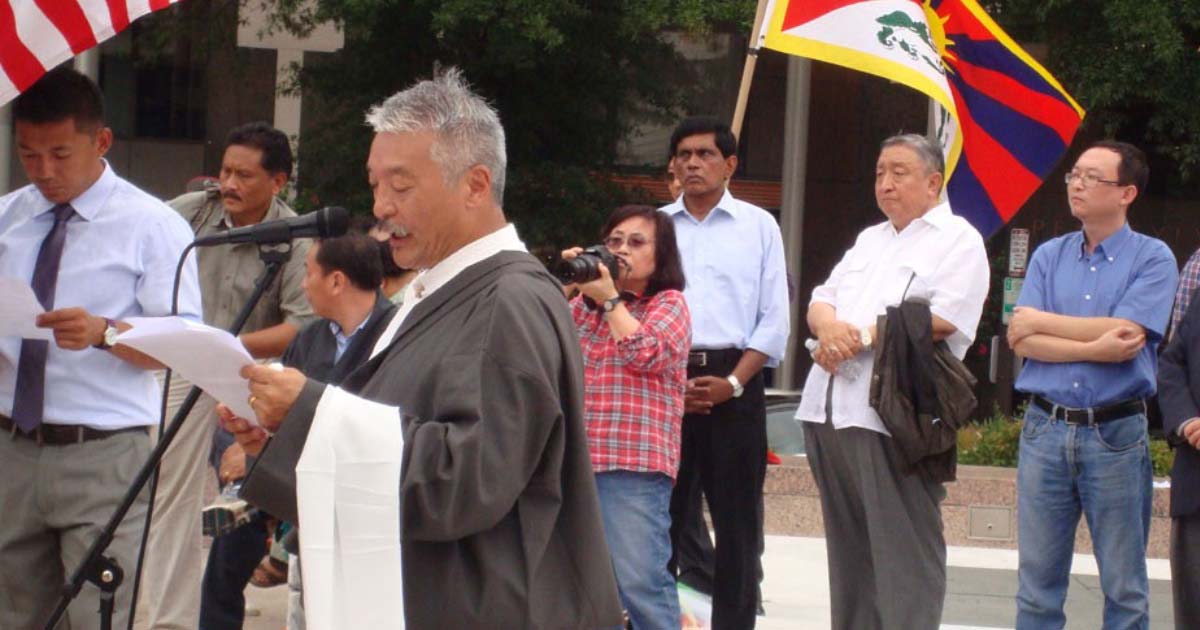
T. Kumar (center, under the pole hoisting Tibetan flag) at a Tibet rally in Washington, DC in 2012. Immediately to his left is Mr. Lodi Gyari, then Special Envoy of H.H. the Dalai Lama.
Given Kumar’s steadfast championing of Tibetan rights, and being a Tibetan, I expressed on our people’s behalf our heartfelt condolences to Kumar’s family. Tibetans gained much from Kumar’s work in Washington, DC, including learning the value of wisdom, empathy compassion.
Kumar was always available to the Tibetan people, whether it was a rally, a meeting or any other opening to add the value of Amnesty International to the struggle for Tibetan freedom. Personally, I enjoyed a cordial relationship with Kumar and appreciated his wise counsel. Oftentimes, I would get phone calls from him, “Bhuchung, Kumar here,” followed by a suggestion of opportunity to advance the cause with the administration or with the Hill.
Kumar was particularly interested in the issue of the 11th Panchen Lama, perhaps the second most widely known Tibetan Buddhist leader after His Holiness the Dalai Lama. The 10th Panchen Lama passed away in 1989 and his reincarnation (recognized by the Dalai Lama) was detained by Chinese Government in 1995, coincidentally in the same year when Kumar joined Amnesty. The 11th Panchen Lama remains in detention and incommunicado to this day and is often called the world’s youngest political prison. Kumar did everything possible to make the U.S. Administration and Congress use their leverage with Beijing to secure his release. If there is anything the Administration has done for the Panchen Lama, Kumar had a mark in that, that is something I am very much sure of.
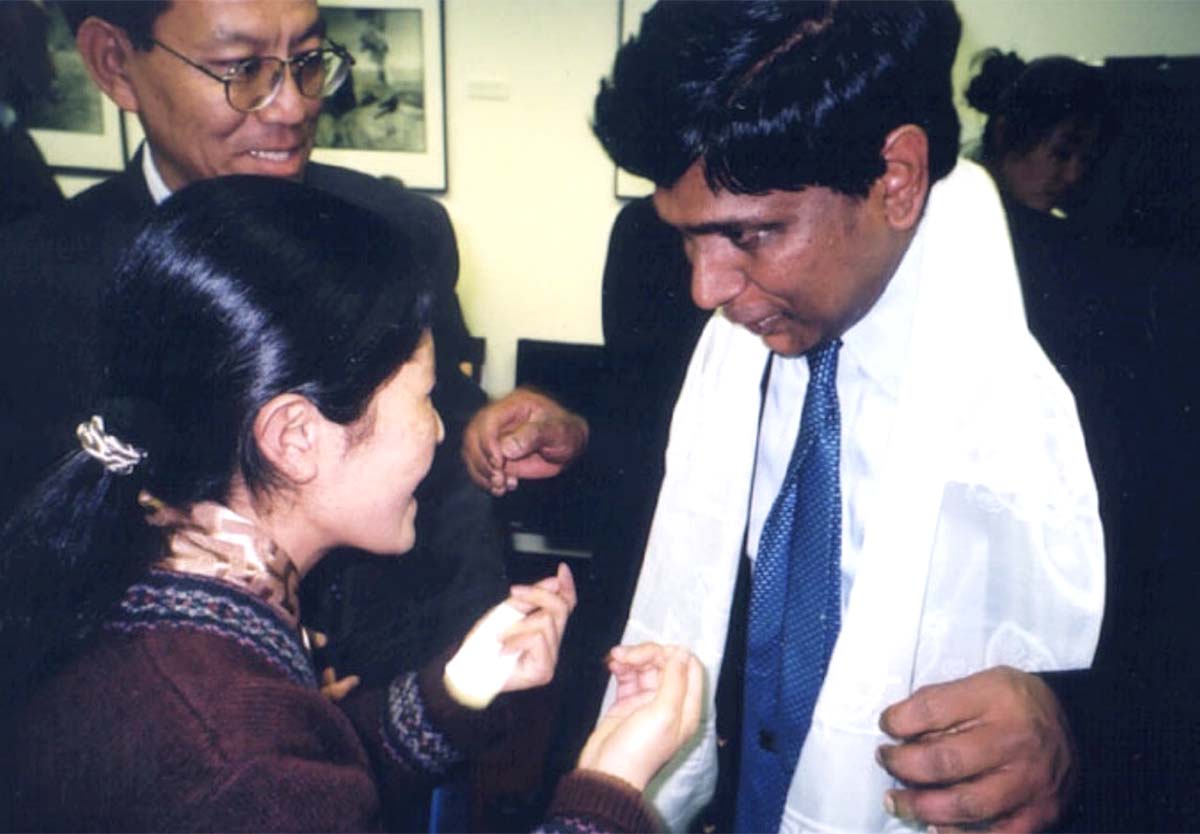
T. Kumar attending a reception in 2003 for the newly released Tibetan political prisoner Ngawang Sangdrol.
Kumar didn’t merely use Amnesty International’s platform; he went beyond the call of his duty, including the call of his organizational duty. The reason why I say this is because the Tibetan issue has human rights elements but it is more than human rights. Amnesty International’s mandate allows it to be involved in issues only within a human rights framework. Given that Tibetan human rights is very much linked to the broader political issue of Tibet’s relationship with China, whenever we had any events on Tibet that had political overtones, Kumar would find a creative solution to allow him to particpate.
I am a Buddhist and I believe in the law of karma. Kumar joined Amnesty International in 1995. I joined the International Campaign for Tibet in 1995. We participated together in many hearings, many briefings, even media interactions. I remember in 2008 when there were large-scale demonstrations by Tibetans in Tibet. Chinese security forces cracked down heavily, and the Diane Rehm Show did a special hour-long discussion on the development. Kumar and I (as well as Steve Marshall who was with CECC at the time) were invited to join the program at American University’s radio studio. So if the law of karma holds true and if Kumar’s religious belief also includes belief in rebirth, I have no doubt that it will take him to a better place.
We Buddhists, whenever we have prayers for someone who has passed away, recite a prayer to our Bodhisattva of Compassion. It is apt to repeat that prayer here for a compassionate person like Kumar. It is short and goes, Om Mani Padme Hum, Hail to the Jewel in the Lotus.
I want to end with a quote from His Holiness the Dalai Lama. In explaining his view of having lived a meaningful life, he said, “Meaningful life means, if possible, helping others. If not, at least restrain from harming others.” T. Kumar’s life personified the living of a meaningful life.
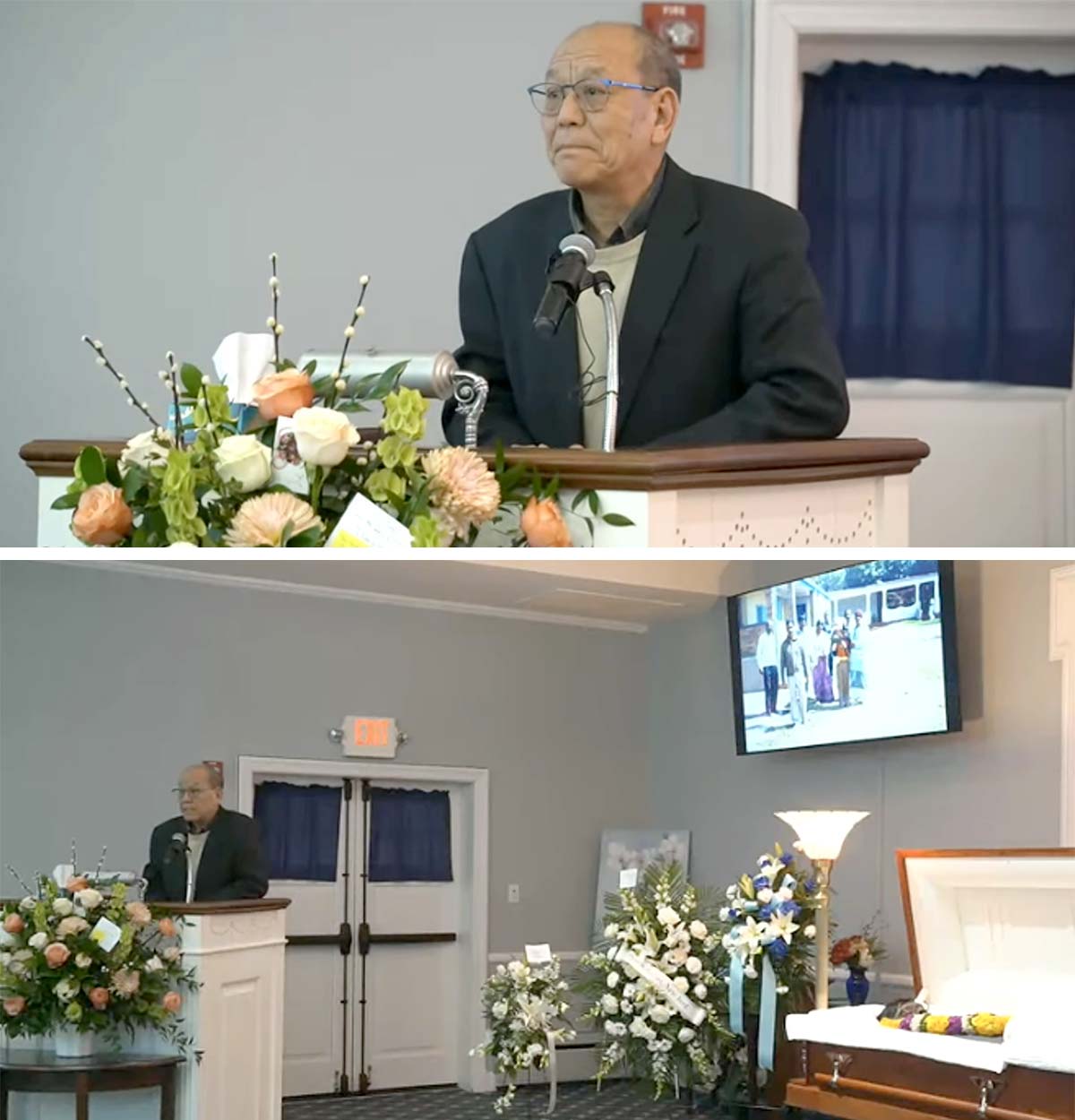
Mr. Bhuchung Tsering speaking at the memorial service for T. Kumar on February 1, 2026.