Commentary

Lights, camera, retraction: How China cut Tibet out of movies

Kundun

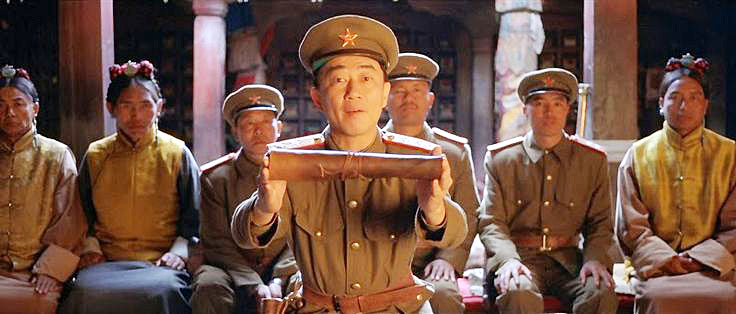
Chinese troops in the 1997 movie “Kundun,” directed by Martin Scorsese. After the film premiered, Disney’s CEO traveled to China to apologize for releasing it.

“You’re not going to see something that’s like ‘Seven Years in Tibet’ anymore,” says Larry Shinagawa, professor at Hawaii Tokai International College, in a recent New York Times piece titled “How China Is Rewriting Its Own Script.”

That’s cause for concern, because when I was growing up, movies like “Seven Years in Tibet” and “Kundun,” both of which opened in 1997, helped introduce me—and surely many Americans in my generation—to the Tibetan issue. If such films are no longer made, how will kids today discover this important topic?

Hollywood screenwriters love a good-vs.-evil story. Twenty years ago, they found a great one in Tibet.

Just imagine this pitch to a producer: admirable but outnumbered protagonists follow a wise elder who teaches inner peace and spiritual growth. The antagonists, meanwhile, are an evil empire bent—as real-world events have shown—on actual global domination.

Not even George Lucas could do it better. So why, then, did Hollywood turn its back on Tibet?

The sad answer is that, for now, the evil empire is winning.

According to the Times report, written by reporters Amy Qin and Audrey Carlsen, “China wields enormous influence over how it is depicted in the movies Americans make and watch.”

The Chinese gained that influence by using many of the same tactics that every colonial power uses: invade when local institutions are weak, buy off the elites and spread fear to squelch dissent.

In the case of Tinseltown, the takeover was obviously less dramatic. But it largely followed the same script.

Hollywood studios were weakened by years of declining revenue and competition from online streaming. China swooped in with huge wads of cash and the promise of a blockbuster market for foreign ticket sales.

As a result, Hollywood executives today are simply too afraid to make a movie that could offend China. That means no more “Seven Years in Tibet” or “Kundun.”

Apparently, the release of those films helped provoke Chinese censorship in the first place. In the mid-1990s, Disney was just breaking into the Chinese market when the government in Beijing heard about “Kundun,” a beautiful film on the early life of the Dalai Lama directed by screen legend Martin Scorsese and written by Melissa Mathison, an International Campaign for Tibet (ICT) Board Member who died in 2015.

China’s leaders raged against the movie, Disney pulled back on its marketing campaign, and Disney’s CEO, Michael Eisner, traveled to China to apologize to the Chinese prime minister—and to negotiate a new theme park in Shanghai. (As a supporter of Tibet and an ardent cinephile, I took heart in this line from a 1998 Film Comment article: “You decide: who’ll be lucky to be even a footnote in movie history, Eisner or Scorsese?”)

Following that experience, it’s safe to assume that no studio today would greenlight a film like “Kundun.” But even when Tibetans come up organically in a story, Chinese pressure forces them out.

Case in point: the 2016 Marvel epic “Doctor Strange.” In the comic books, the titular doctor learned his craft from the Ancient One, a wise Tibetan sage.

But in the movie, the Ancient One is Celtic and played by Tilda Swinton, a white actress from Scotland. Although Disney—once again behaving as nefariously as any of the villains in its cartoons—claimed it was trying to avoid a stereotypical portrayal of Asians, the screenwriter shockingly admitted, “If you acknowledge that Tibet is a place and that [the character is] Tibetan, you risk alienating one billion people.”

Unfortunately, Hollywood, the land of make believe, is not the only place where China’s government has pressured Americans to pretend Tibet isn’t real.

The 2018 annual report by the U.S.-China Economic and Security Review Commission notes that earlier this year, “the Shanghai branch of the Cyberspace Administration of China shut down Marriott’s Chinese website for a week as punishment for listing Taiwan as well as Hong Kong, Macau and Tibet as separate from China on a questionnaire for customers.”

Like its peers in La-La-Land, Marriott sheepishly apologized. ICT followed up with a letter to Marriott’s CEO, Arne Sorenson.

The Commission’s report also states that China doesn’t have to tell European diplomats not to mention Tibet; instead those diplomats simply choose on their own not to bring it up because they don’t want to face Beijing’s wrath.

The result is arguably the most insidious form of censorship: self-censorship. And it’s becoming more common on the issue of Tibet.

Unlike in the movies, good doesn’t always triumph over evil in real life. Hollywood, which once championed the Tibetan cause to kids like me, now shuns the Tibetan people.

Thankfully, there’s still hope for a better ending. Movie studios may fear getting banned by China, but Tibetan-Americans already face that reality. Although Chinese citizens are free to travel throughout the United States—and Chinese officials throw their weight around unimpeded in this country—China restricts Tibetan-Americans from visiting their homeland.

The Reciprocal Access to Tibet Act, which was passed by the House of Representatives in September and unanimously approved by the Senate Foreign Relations Committee last week, aims to change that situation by denying US visas to Chinese officials who prevent Americans from entering Tibet.

According to Congressional Quarterly, Sen. Marco Rubio (R-Fla.), who introduced the Reciprocal Access to Tibet Act in the Senate, said that Chinese authorities are “literally undertaking an effort to strip people of their identity.”

Although we can no longer count on our favorite movies to protect that identity, we can—and should—still lobby our government to do so.
10 years after “Leaving Fear Behind” exposed Chinese repression, situation in Tibet has only gotten worse

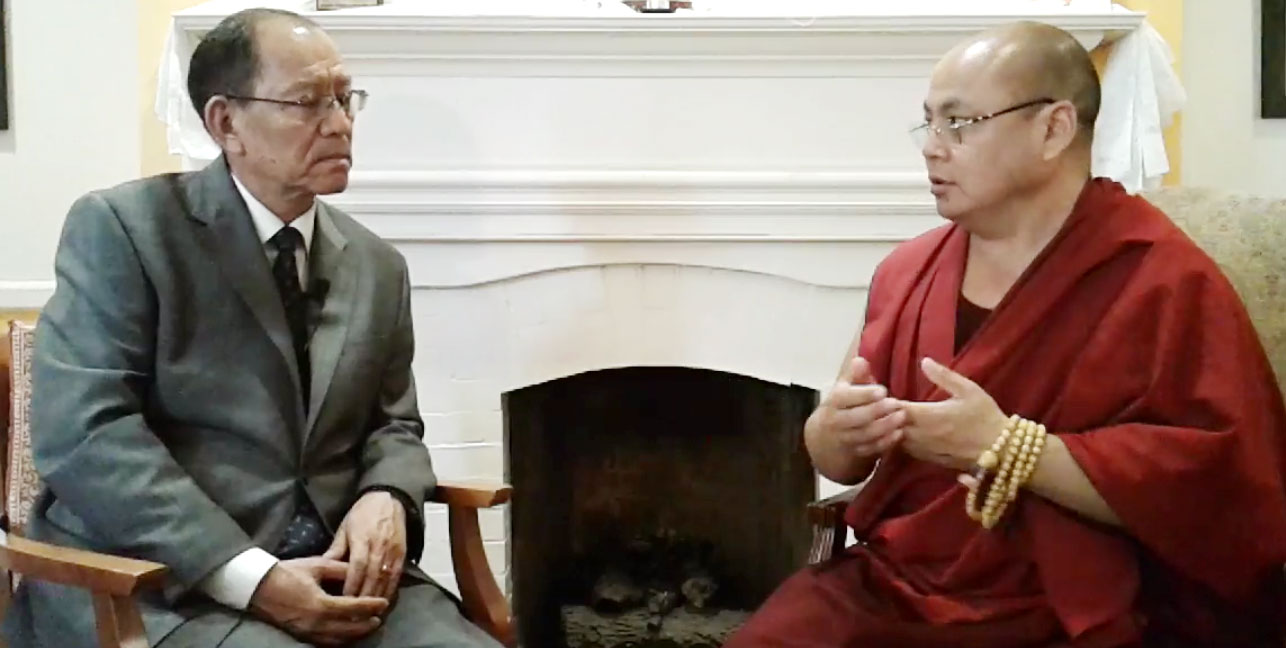
Golok Jigme, who helped create “Leaving Fear Behind,” being interviewed by International Campaign for Tibet Vice President Bhuchung K. Tsering about the ongoing human rights crisis in Tibet 10 years after the documentary premiered.

Ten years ago this month, a bold documentary exposed the repression ordinary Tibetans faced under the Chinese occupation of their country.

A decade later, the situation in Tibet has only gotten worse.

The documentary, “Leaving Fear Behind,” features interviews with average Tibetans describing, in heart-wrenching detail, the inhumanity of Chinese rule, as well as their feelings about the then-upcoming 2008 Summer Olympics in Beijing.

I started my new job as Communications Officer with the International Campaign for Tibet (ICT) earlier this summer, and one of the first things my colleague John N., ICT’s Advocacy Officer, told me to do was watch “Leaving Fear Behind.”

It was a wise call: There was something uniquely moving about seeing the faces of the real people of Tibet and hearing them explain their own life experiences, and I felt inspired to work even harder to advance their cause.

If you haven’t seen the film yet, there’s information below about how to watch it. But keep reading, because the story of how “Leaving Fear Behind” came to be is almost as compelling as the documentary itself.

Plight of the Tibetan people

Appearing onscreen toward the end of the 25-minute documentary, the filmmaker, Dhondup Wangchen, says his goal was “not to make a famous or particularly entertaining film. This film is about the plight of the Tibetan people–helpless and frustrated.”

That frustration can be seen throughout the footage, with Tibetans decrying China’s severe restrictions on their freedoms and way of life.

Several of the people interviewed in the film talk about China’s efforts to force Tibetans off their land in order to steal Tibet’s rich natural resources.

The Tibetans also discuss their lack of religious freedom, as well as their desire to see the return of their spiritual leader, the Dalai Lama. The Dalai Lama was forced into exile in 1959 after China invaded Tibet, and he has not returned to his homeland since.

In a particularly poignant scene, an elderly Tibetan wipes away tears as the Dalai Lama is seen on TV receiving the United States Congressional Gold Medal in 2007.

Several of the Tibetans in “Leaving Fear Behind” say China’s hosting of the Olympics had done nothing to improve their situation. Indeed, a few months before the Games began, large-scale protests against China broke out across the Tibetan plateau.

“China was awarded the Games on the condition that the situation in China and Tibet would improve,” one monk says. “…However, after they were awarded the Games, there has been no greater freedom or democracy, and repression is getting stronger and stronger.”

Despite this repression, Wangchen says nearly all of the more than 100 Tibetans interviewed for the film agreed to have their faces shown: “Some said that we absolutely had to show their faces, otherwise it wasn’t worth speaking to them.”

Journey to leave fear behind

To create the documentary, Wangchen and Golok Jigme, a Tibetan monk and activist, spent about six months making a perilous journey through the eastern regions of Tibet.

After they finished shooting, both men were arrested, but they successfully managed to smuggle their footage out of the country.

On August 6, 2008, “Leaving Fear Behind” premiered in secret before a group of foreign journalists in Beijing, just days before the Olympics began.

Although the documentary reached the outside world, both Wangchen and Jigme were arrested for their attempts to exercise free speech. Wangchen was given a six-year sentence, and, after being subjected to close surveillance and mistreatment by Chinese police after his release, he decided to flee the country.

On Christmas Day 2017, Wangchen arrived in San Francisco and was finally reunited with his family in San Francisco. Earlier this year, he described his ordeals—including the depraved conditions in China’s jails—during his testimony to the US Congressional-Executive Commission on China.

Jigme was also arrested and severely tortured. He managed to escape and go into hiding, where he lived in constant fear until he was able to flee to India in 2014.

A few weeks ago, Jigme was in Washington, DC for the US State Department’s first Ministerial to Advance Religious Freedom. US Vice President Mike Pence praised Jigme in a speech during the event, saying “we are honored by your presence, and we admire your courage and your stand for liberty.”

Worsening situation

“Leaving Fear Behind” has been screened in several countries since its release, including at a 2014 showing in the European Parliament that ICT helped to organize.

In the US, the film can be watched on YouTube with English subtitles.

Although the film and the filmmakers made it out of Tibet, Jigme said in a recent interview with ICT that, “Basically, under the Chinese Communist authoritarian rule, under [Chinese President] Xi Jinping, the situation has become much worse” in Tibet since 2008.

“Leaving Fear Behind” was an act of extraordinary courage by ordinary Tibetans who simply wanted the world to know about the enormous repression they faced. As we mark the 10th anniversary of this brave film, all of us who care about human dignity must redouble our efforts to advance human rights and self-determination for the people of Tibet.

Beware the Sixth Tone

Lhagang, Tibet.

A temple outside of Lhagang, Tibet.

Syllables in the Mandarin language all use one of four active tones, or a fifth ‘neutral’ tone. So, what is the sixth tone? Far from being a new linguistic addition to Mandarin, the Sixth Tone is a state-market hybrid news outlet created to spread Communist Party-approved viewpoints with a bit more subtlety than they normally employ. Combined with a web-savvy design, it’s part Ministry of Truth and part Vox.com.

Chinese media pieces on Tibet normally conform to one of a small number of recognizable tones. There are pieces that rage against the so-called Dalai Clique, pieces where Party cadres resolutely broadcast the Chinese government’s positions and slogans, and pieces that crow over purported evidence of progress in Tibet- the ‘happy, dancing Tibetans’ motif that Chinese media outlets have repeated for decades. One long-running problem is that these narratives have little appeal for people who have access to international media; essentially, this style of propaganda only works in a news vacuum.

Enter the Sixth Tone. In an attempt to find something less tonally off-putting for foreigners, the creators of this new site craft pieces that focus on telling personal stories while removing the broader political context that the Communist Party doesn’t like people to hear about. This dynamic is very much evident in an article they published earlier this week about life in Lhagang, a small town in eastern Tibet.

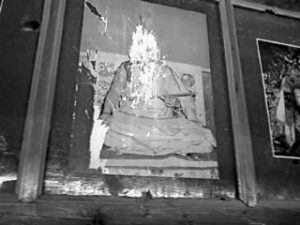
Consistently referring to this Tibetan town by its Chinese name, Tagong, Sixth Tone paints a picture of a town with nomadic roots in flux as the tourism industry reshapes people’s livelihoods. So far, so good; this is certainly a real and timely dilemma faced by many Tibetans. But Sixth Tone writes about the dwindling number of nomads without mentioning heavy-handed government drives to forcibly settle nomads across Tibet. Instead, they present the issue as an apolitical question of one way of life losing its appeal. The author also notes the presence of a picture of the Dalai Lama in a Tibetan home without mentioning government prohibitions on his image, and that Tibetans can be beaten or imprisoned for possessing it. Without this context, the open display of a photograph of the Tibetan spiritual leader may even look like a sign of religious freedom in Tibet, instead of a frequently-risky act of devotion to a man Sixth Tone’s owners in Beijing describes as a ‘wolf in monk’s robes.’

 portrait of the Dalai Lama

A portrait of the Dalai Lama defaced by Chinese police in neighboring Ngaba prefecture, March 2008.

The article touches on lithium mining in Tibet, too, and here the author swerves to avoid mentioning that it was none other than the town of Lhagang that made international headlines last year when Tibetan villagers staged a sit-in protest to demand an end to mining in the area. Chinese authorities responded by dispatching armed police in riot gear. This wasn’t the first protest to take place in Lhagang; in 2008 Tibetans scaled a cellular tower next to the town and flew a Tibetan flag from the top.

Sixth Tone’s snappy content and light touch makes it potentially much more palatable to a foreign audience, an audience that generally dislikes the strident tone of traditional Global Times or Xinhua-style propaganda. We should take note of the way they frame these issues, though. Serious problems created by Communist Party policies are reduced to personal choices, with no mention made of government diktats that force Tibetans to put their safety (and all too often their lives) at risk when they protest poisoned rivers or display photographs of the Dalai Lama. For a publication that claims to “highlight the nuances and complexities of today’s China,” their dedication to glossing over issues and ignoring vital pieces of context seems noteworthy.

My Reflection on the 2016 Tibetan Youth Leadership Program

By: Passang Gonrong

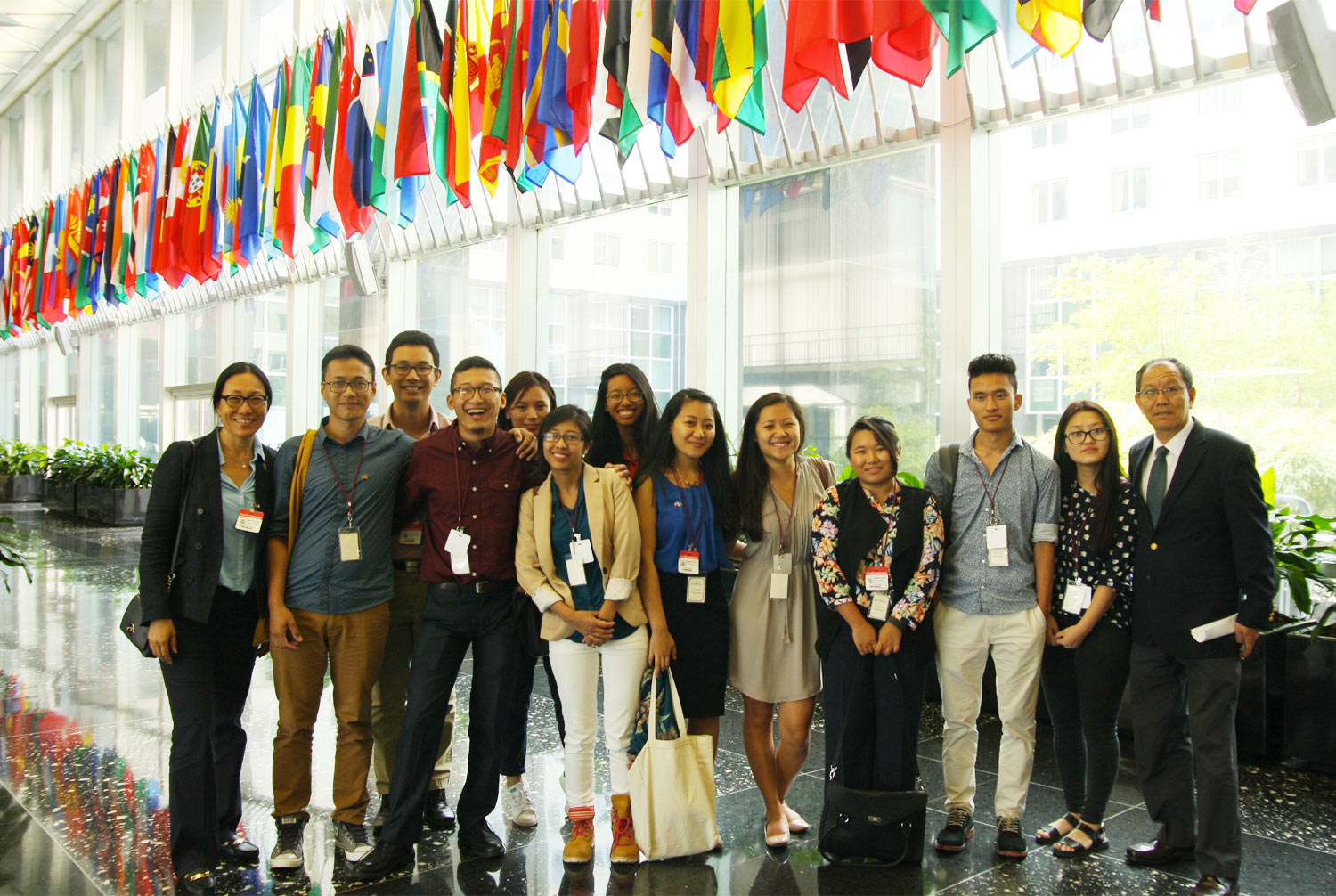
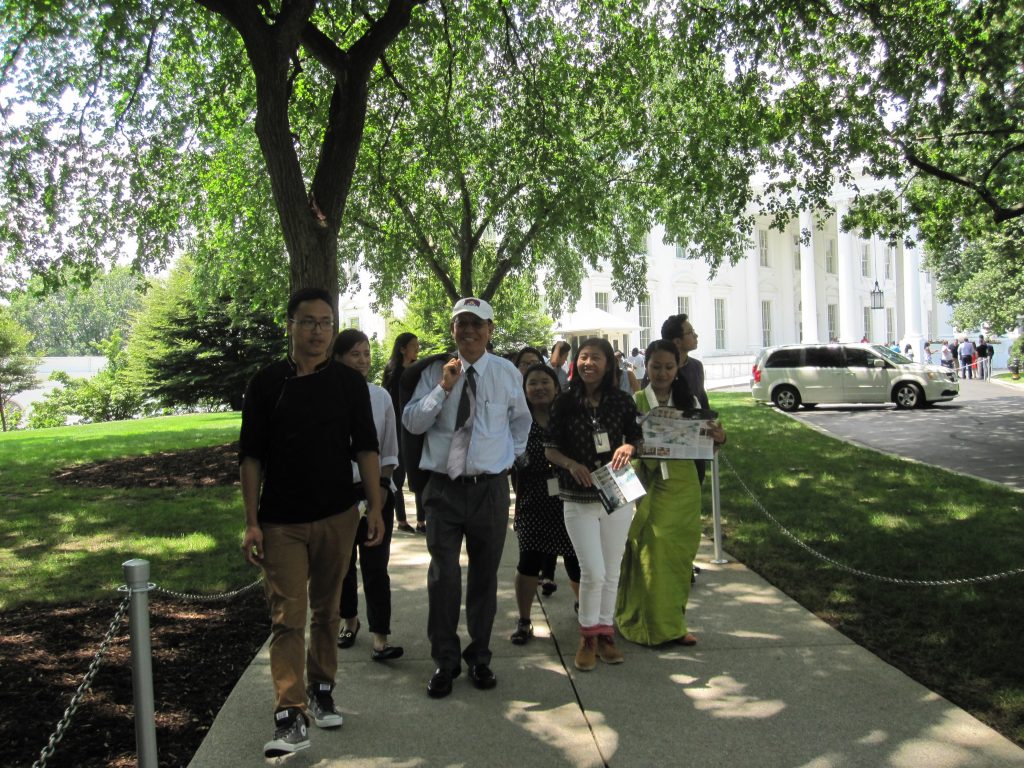
Participants of ICT's 2016 Tibetan Youth Leadership at the US State Department.

Participants of ICT’s 2016 Tibetan Youth Leadership at the US State Department.

My experience with the Tibetan Youth Leadership Program (TYLP) started when I was applying to the program in March. The prompt for the essay question was, “What does it take to be a leader in the Tibetan community?” On the surface, it sounded like a easy question with a simple solution; however, when I tried to come up with an answer, it lead to an ambiguous and complex response. This made me question not only what constitutes as a leader, but more importantly what the Tibetan community means to me. These ideas were just the tip of the iceberg for my week with TYLP.

This year’s cohort came from seven states across the country with ages ranging from 19 to 26 years old. There were students who were born and raised in Tibet, students who were born and/or raised in India and Nepal, and students who were born and/or raised in America. Although we all had the identity of being Tibetan, our diverse backgrounds allowed us to learn greatly from each other. For me, as a Tibetan born in America, hearing stories from my peers who had escaped from Tibet and those who were raised in India and Nepal were eye opening. Each one of us brought something different to the table. We were united in not only our identity of being Tibetan, but a shared goal of wanting to become future leaders in the Tibetan community.

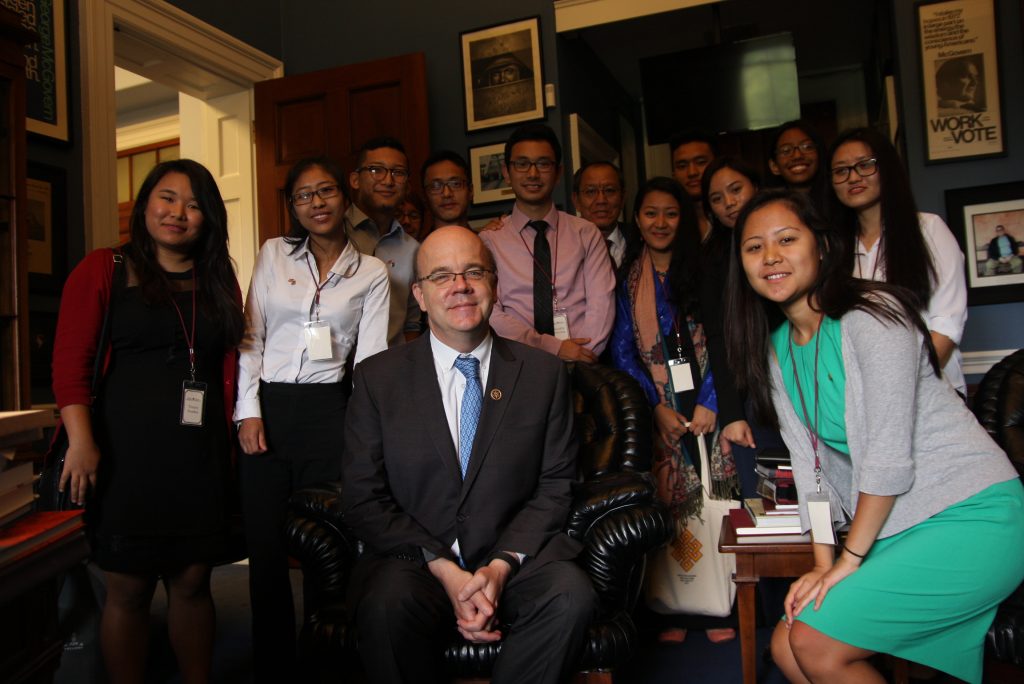
We arrived to the capitol on the fourth of July and were lucky enough to see the red white and blue fireworks on the national mall underneath the Washington Monument. It was a magical start for our week ahead where we were learned the importance of not only our Tibetan identity, but our American identity. Bhuchung la, the vice president of International Campaign for Tibet (ICT), stressed that as Tibetan-Americans we have the right and privilege to advocate for Tibet to our representatives in the American government. Our Tibetan- American identity is important because we have the opportunity to help our brothers and sisters in Tibet through this country. This information was valuable to me because I had always compartmentalized my identity. I was a proud Tibetan and I was a proud American but I  did not think those two were entwined. It was during our mini lobbying day on capitol Hill that made me realize how mistaken I was. We had the honor of meeting with Congressmen, Jim McGovern, and Congresswoman, Betty McCollum, who both went on the Congressional Delegation to China and Tibet with Democratic Leader Nancy Pelosi. Both of these representatives, along with the others we met during the day, demonstrated to me the duty we, Tibetan Americans, have to champion for Tibet. Members of Congress would not have heard or supported Tibet if it were not for His Holiness the Dalai Lama, the persistent Tibetan Americans, and the numerous pro-Tibetan organizations reminding Congress how important these issues are to their constituents.

IMG_2167Our week was packed with visits to the State Department where we able to attend a media briefing, have an interactive session with Ambassador David Saperstein, and meet with Mr. Todd Stein, a senior advisor to the Under Secretary of State for Civilian Security, Democracy, and Human Rights and concurrently serves as special coordinator for Tibetan issues. We had the opportunity to visit the Tibetan Language Service for both Radio Free Asia and Voice of America where some of my peers were interviewed on air. We went on a White House Tour, had a meeting with the President of the National Endowment for Democracy, and also met Representative Kaydor Aukatsang la during our visit to the Office of Tibet. These were just the few things we were able to do in our busy week.
One of the most meaningful sessions for me was when it was just us and Bhuchung la. We were able to reflect on the programs we attended during the week and come up with solutions that focused on Tibet and Tibetans through the lens of the American government. The conversations that were discussed during the session and throughout the week were stimulating and engaging. Each one of my peers were motivating, thoughtful, and encouraging. I am excited to see the inspiring things they will do in the future. On the other hand, the main reason we were able to have such an open dialogue was because of our coordinators,  Bhuchung la and Tencho la, who created a space that encouraged growth and ideas. We were able to freely share these ideas without being intimidated or afraid to ask questions. This is why I think TYLP is so successful.

IMG_0290I highly urge every Tibetan college student to apply to the Tibetan Youth Leadership Program. The knowledge and friendships I have gained this week will be everlasting. The International Campaign for Tibet has created a unique and valuable program granting young Tibetans access to learn more about their identity and how to become leaders in the Tibetan American community.
Why Tibet Could Be the Best Opportunity for Xi Jinping

This article written by ICT President Matteo Mecacci, co-authored by ICT Vice President Bhuchung K. Tsering, was published on September 22 by The Huffington Post.

Obama Xi

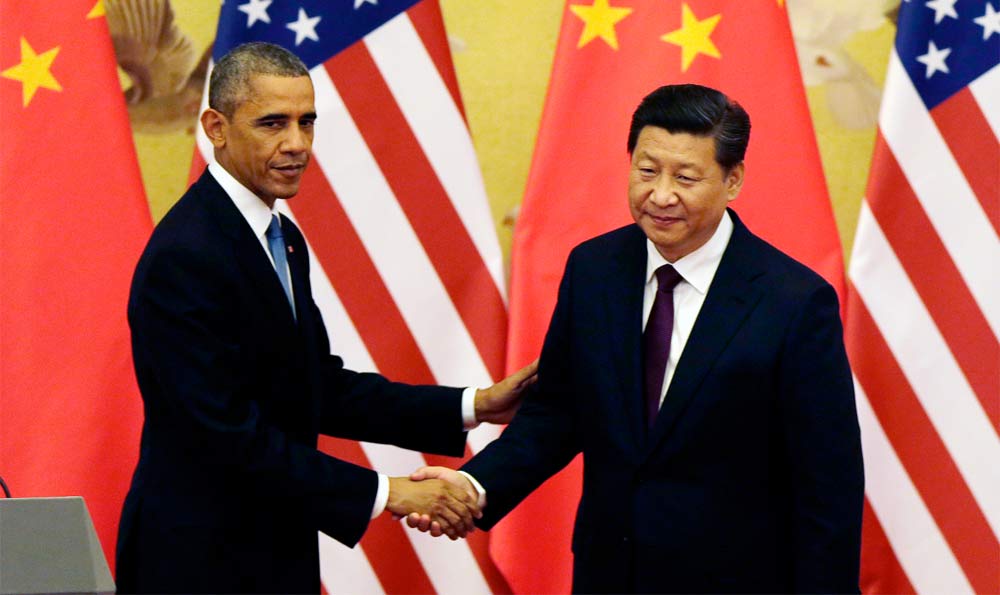
U.S. President Barack Obama, left, shakes hand with Chinese President Xi Jinping after their press conference at the Great Hall of the People in Beijing, China in 2014. (Photo: AP)

On September 24 later this month, China’s President Xi Jinping will arrive in Washington to meet President Obama for an important state visit. The context is a growing alarm about China’s less than peaceful rise, and provides a rare opportunity for the president to give an important message on Tibet.

It has been noted in Washington that President Xi’s self-proclaimed “China Dream” — a vision of a peaceful and rising China on the world stage — has become a Kafka-esque nightmare for many.

China’s government has been publicly blamed for major cyber attacks suffered by US federal institutions and businesses over the last months and more sanctions seem to be in preparation to target some of its officials. US and EU business leaders are now openly expressing concern for the safety of their work in China; fears that were previously reserved for political dissidents, Tibetan religious leaders, lawyers and journalists targeted by Beijing. CEOs and others are obviously concerned about the purge and targeting of city workers in China after the recent downturn of the financial markets.

There has been an unprecedented attack on Chinese civil society, resulting in the arrests of civil rights lawyers and peaceful activists. In Tibet, writers and artists have been tortured and imprisoned for singing about the Dalai Lama or expressing their views in literary journals.

The expansion of outposts in the South China Sea has unnerved China’s neighbors and US allies in the region and revived the debate about increasing US military spending to push back against what are perceived as Beijing expansionist aspirations in the Pacific.

The domestic anti-corruption campaign — with its international ramifications to recover financial assets — has not been followed up by a reform of the judicial system that provides independence. It is now perceived more as a way to eliminate other competing factions than a genuine attempt to implement the rule of law in the public sector.

We know that Tibet, as a strategic border area, is an important matter to China. The Party State has stepped up its rhetoric against the Tibetan leader, the Dalai Lama, in this context — which sits uncomfortably with the White House. President Obama has met the Dalai Lama four times and the two men enjoy a warm relationship.

The Dalai Lama’s peaceful advocacy and will to find a negotiated solution with China is highly respected in Washington, and his stature in the world stage as spiritual and moral leader increases with his age.

In the interest of China, and his own, Xi Jinping, certainly needs to give different signals to a world that is skeptical about his administration. A commitment to reduce carbon emissions in view of the COP21 UN Summit in Paris on climate change later this year is in the making, and would be certainly welcomed by the Obama administration, but it won’t be a surprise, as it won’t be enough expressing a general commitment to find “peaceful” solutions to the South China issues or to “fight against cyberterrorism.”

China can show to the world that it is really changing only if it can make profound reforms, such as moving from a centralized and authoritarian political system — which leads to its embrace of nationalistic and aggressive policies — to a more democratic and decentralized one, where the rule of law and a process of genuine consultations lead to sound political decisions.

For this, the Tibetan issue represents an important opportunity for Xi Jinping. By embracing the Dalai Lama’s sincere offer for dialogue based on his Middle Way Approach, and his decision to devolve his political authority to Tibetan institutions in exile — clearly indicating that he has no interest in going back to Tibet to rule — Xi Jinping would show that he is open to find some solutions to difficult and longstanding political issues that are of concern for the international community.

President Obama, who is also a Nobel Peace Laureate, should personally tell President Xi that he has nothing to fear from the Dalai Lama. The resistance by Tibetans to the decades-long policies of cultural and ethnic assimilation has been remarkably nonviolent so far, and this is largely due to the leadership provided by the Dalai Lama. It is the 80th birthday year of the Dalai Lama and this should provide a sense of urgency for resolving the issue in his lifetime. It is absurd to believe that Xi Jinping, leader of an atheist Party state, can ensure stability in Tibet through stage-managing a reincarnation of the Nobel Peace Laureate and seeking to eviscerate a peaceful religious culture.

Rather, by embracing the Dalai Lama President Xi might be able to bring about a change in the mindset of the international community on China and its future. China and its leaders know that despite its economic influence (which seem to be shaking currently) there is much distrust by the governments about China’s intentions and ambitions. If China respects the aspirations of the Tibetans for self-rule, the Dalai Lama could be a catalyst for China’s acceptance as a responsible member of the community of nations.

Xi Jinping as a Living Buddha

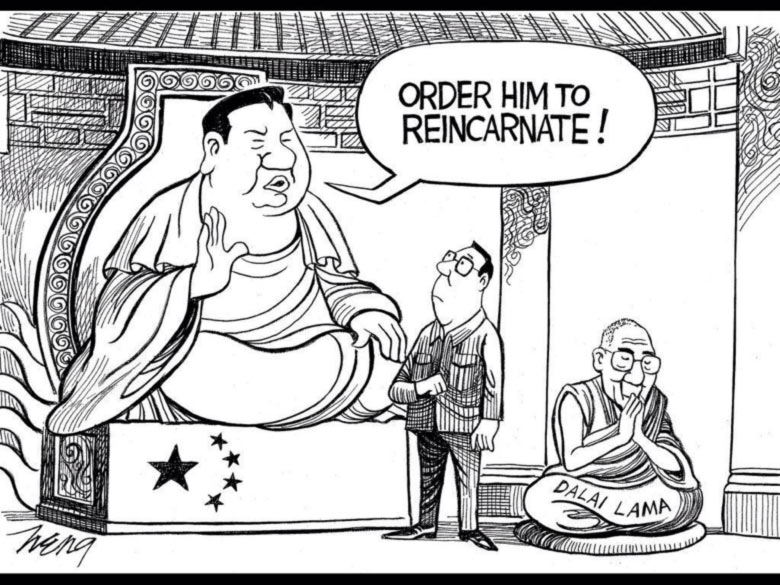
Communist Party officials visiting Beijing for annual meetings shook up the internet and saddled themselves with reams of bad press last week when they harshly attacked the Dalai Lama. That in itself isn’t anything new; even headline-grabbing accusations like claims that the Dalai Lama ‘betrays his country and his religion’ are just new iterations of Beijing’s old themes. What really got people’s attention is the way Party officials claimed ownership and mastery over the Tibetan Buddhist concept of reincarnate lamas: “Decision-making power over the reincarnation of the Dalai Lama, and over the end or survival of this lineage, resides in the central government of China,” senior Party official Zhu Weiqun told reporters.

cartoon

NYT editorial cartoon- Xi Jinping tries to issue spiritual orders to the Dalai Lama.

There’s an obvious absurdity to this claim; Tibet expert Robert Barnett mentioned seeing Zhu’s statement “through the prism of Monty Python.” It might be useful to look at some of the specifics regarding Beijing’s claim though, in order to fully appreciate the absurdity of these ideas.

To begin, the Party has been riled up by comments the Dalai Lama made over the last few years concerning his reincarnation. He has speculated that he may return outside the borders of the People’s Republic of China, or as a girl, or that he may not be reborn at all. He has emphatically repeated that senior Tibetan Buddhist leaders, and the Tibetan people at large, will end up making the final decisions, and in the meantime as long as he remains in good health these matters won’t have to be decided for some time. Hence this reply, delivered by Padma Choling, the Chinese-appointed governor of the Tibet Autonomous Region: “Whether he wants to cease reincarnation or not, this decision is not up to him.”

Here the obvious absurdity reveals itself: if we take the Dalai Lama to be a human manifestation of Chenrezig, the Bodhisattva of Compassion, then we can safely say that the decision certainly does lie with him, and not with some department of the Communist Party of China. Padma Choling also asked reporters “if the central government had not approved it, how could he have become the 14th Dalai Lama? He couldn’t.” And yet, he did- because the central government he’s referring to now, established by the Communist Party, didn’t yet exist when the current Dalai Lama was recognized. The central government of China at the time was that of the Republic of China, which has since relocated to Taiwan. It’s worth noting that their involvement was minimal, as well- their representatives arrived after traditional Tibetan methods had been used to confirm the identity of the child, and they merely joined other foreign delegations in attending the enthronement ceremony. The Party would like you to believe that they presided over the ceremony, but historian Tsering Shakya has found no evidence supporting this claim.

Recently the Party has begun insisting that the use of a Qing dynasty relic called the Golden Urn is crucial for recognizing reincarnate lamas. My colleague Pema Wangyal examined the history of the Golden Urn last year, and his findings significantly undermine the Party’s position. The Golden Urn was only involved in the selection of three out of the fourteen Dalai Lamas, and just two of the first ten Panchen Lamas. Notably, the current Dalai Lama was selected without the use of the Golden Urn.

The Communist Party obsession with the Golden Urn has a much deeper flaw, though. As Elliot Sperling points out, the only reason the Golden Urn had any legitimacy in the past is that the emperors of the Qing dynasty practiced Tibetan Buddhism. Emperor Qianlong was acknowledged as an emanation of Manjusri, and he was considered by some to have powers of discernment that might help in the process of searching for reincarnations. Today’s Communist Party leaders have no such faith, and no such acknowledged spiritual roles. The rules of the Communist Party would even appear to make this impossible, as atheism is a must for senior Party leaders.

Even then, the patron-priest relationship that linked the Dalai Lamas to China in the past was formally abrogated by the 13th Dalai Lama in 1913. In the absence of any such arrangement, Beijing would be wise to leave spiritual matters like the recognition of reincarnate lamas to qualified spiritual authorities. This will spare them from the absurdity of documents like State Religious Affairs Bureau Order No. 5, a 2007 Chinese law which says people who plan to be reborn must complete an application and submit it to several government agencies for approval. It’s a law which somehow manages to make a mockery of both the Communist Party’s supposed atheism and the religious institutions of Tibetan Buddhism.

To borrow their words, Zhu Weiqun and Padma Choling have taken an ‘extremely frivolous and disrespectful attitude’ towards this issue, and a good first step towards sorting it all out would be for them to stop intentionally conflating the relationships Tibet and Tibetan Buddhism has had with the Communist Party, the Republic of China, and the Qing dynasty. Tibetan Buddhist leaders like the Dalai Lama are perfectly capable of making their own decisions regarding the future of Tibetan Buddhist institutions, and they should be free to do so without outside interference.

How does one incite ethnic hatred in China?

Imagine a country which is openly denying ethnic minorities the right to check into hotels, and to receive passports. Imagine a country where a rights lawyer from the majority ethnicity calls these kinds of policies ‘ridiculous.’ And finally, imagine a country where the criminal charge of ‘inciting ethnic hatred’ that soon follows is brought against the lawyer for opposing these policies, and not against the government agencies responsible for instituting them.

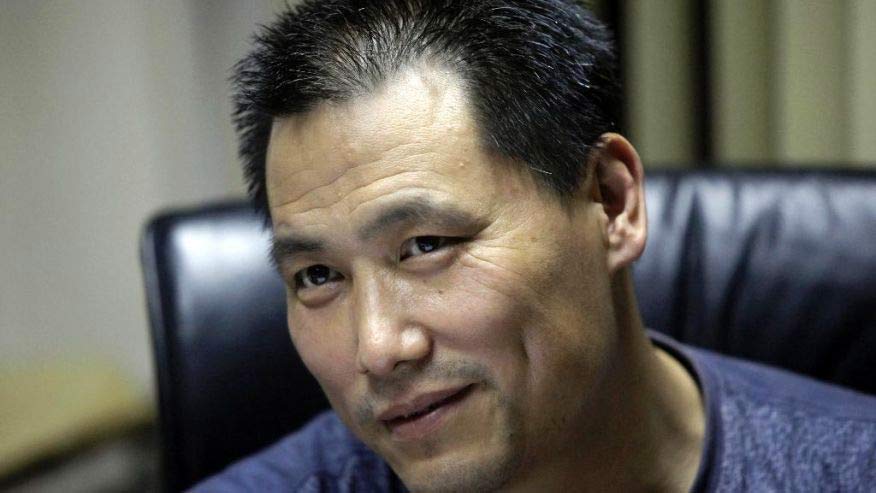
The lawyer is Pu Zhiqiang, a smart and steadfast man whose commitment to defending rights runs all the way back to his participation in the 1989 Tiananmen Square movement. He has defended high-profile Tibetans, including Karma Samdrup, and Perry Link described his outlook on minorities in the PRC thusly:

In his comments on Uighurs and Tibetans, Pu tries to appreciate how ethnic minorities see things—not ideologically but as practical matters of daily life. He hears about a new regulation ordering that Buddhist temples in Tibet hang portraits of the top Chinese leaders—all Han—and that the stated reason for the move is “to dissipate religious consciousness.” He posts: “Are Han heads insane? Or only the head Hans?”

Pu Zhiqiang

Pu Zhiqiang

The latest word is that Pu rejected the charges as groundless from his cell in a detention center, but it seems unlikely a Party-picked judge will agree- as Andrew Jacobs of the New York Times reminds us, as of 2013 Chinese courts had an acquittal rate of just 0.007%. Jacobs referred to legal experts who say that the issue centers on “China’s party-run judiciary, a system in which the police, prosecutors and judges work together to ensure convictions.” The consequences could be severe for Pu, who would face an 8-year prison term. The evidence presented by the government as proof of his incitement of ethnic hatred comes in the form of a handful of Weibo posts, the equivalent of tweets.

Meanwhile, Tibetans find it difficult to leave the country, and difficult to stay in it as well. Freedom of movement is one of the most basic and fundamental human rights, something enshrined in both the Universal Declaration of Human Rights (to which China is a signatory) and in the first Constitution of the People’s Republic of China (although it was later removed after the institution of the hukou system). The restrictions on passports, which are implemented in some places by requiring Tibetans to hand in old passports and then denying them new ones en masse, are completely unlike the way the Communist Party treats Chinese people. Domestic travel has become just as difficult, with Tibetans who live outside the Tibet Autonomous Region [TAR] finding it difficult or impossible to visit the TAR, and with Tibetans inside the TAR encountering new restrictions on their movement within their own ‘autonomous’ region. “We can’t accept Tibetans,” one hostel worker told Radio Free Asia. “It’s clearly stated in the police regulations.”

By choosing to charge Pu while they continue the practice of structural discrimination, the Party makes it clear that in their view ‘ethnic hatred’ isn’t incited by those who violate the rights of China’s ethnic minorities, but rather by those who call for these violations to end. It’s a view that reflects the absolutely dominant position that the Chinese hold in the Communist Party, and one that leaves no place for the view of the minorities- a polar opposite to the way Pu viewed the Tibetans and Uyghurs.

Didi Kirsten Tatlow recently wrote from a Chinese elementary school where students are taught mnemonic devices involving bloodthirsty Japanese people, and where parents muse about how “Tibetans are considered inferior and such allegedly inferior people will never lead China.” In Xi Jinping’s China they’re far less likely to get in trouble for ‘inciting ethnic hatred’ for saying something like that than someone else would be for commenting on it.

Losar in the State Department Heralds the New Year for Tibetan Americans, in more sense than one

On July 21, 2014, history of sort was created when around 100 Tibetan Americans from Amherst, Boston and nearby areas joined US Congressman James McGovern at the City Hall of Northampton, MA, as he held a press conference on his introduction of HR 4851: The Reciprocal Access to Tibet Act, in the House of Representatives. This was a public acknowledgement of the existence of the Tibetan American community and their being a stakeholder on issues relating to Tibet in the United States Congress.

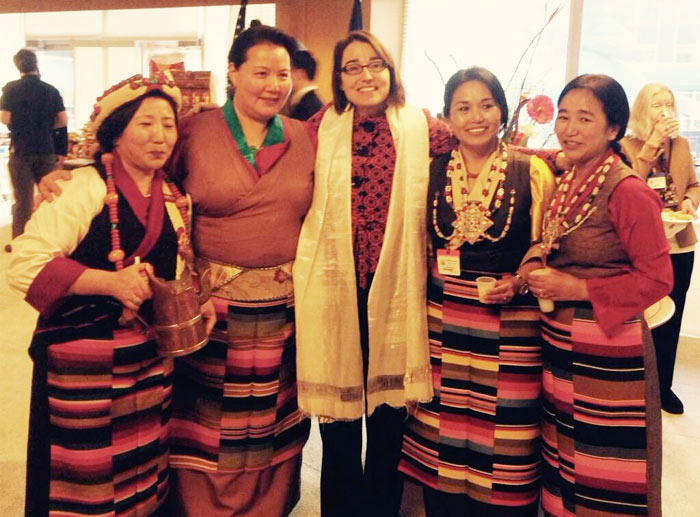
Seven months later, another history was created when on February 24, 2015, Under Secretary Sarah Sewall, in her capacity as the U.S. Special Coordinator for Tibetan Issues, hosted in the State Department a Losar (New Year) to an invited group of Tibetan Americans, diplomats and other guests.

State Department Losar reception

Sarah Sewall with some of the Tibetan American artists and “Chang maidens” during the State Department Losar reception.

As Under Secretary Sewall invited the gathering to join her in saying, “Losar Tashi Delek” one could sense a special emotional feeling among the Tibetan Americans privileged to be participating in the event. Excitement was clearly visible as quite a few of the Tibetan Americans who had come to help serve the traditional Tibetan delicacies and drinks could not resist taking the time to shoot photos, to record the history in the making.

In fact, Karma Gyaltsen la, who together with some other colleagues performed songs and dances, put it best when he adjusted the lyrics of a traditional Tibetan New Year fixture, the recitation by a Drekar, a jocular mendicant, wondering whether the Losar celebration within the State Department “was a dream or a reality.”

Why is the Losar at the State Department significant? As Under Secretary Sewall said at the reception, “Now, one of the amazing things about the Tibetan American community is that in numbers you all… are relatively small, but in your influence, and in your impact, you are enormous.” It heralds virtually a new year for the Tibetan Americans whose existence is increasingly being noticed in the United States.

Former Special Envoy of H.H. the Dalai Lama, Gyari Rinpoche, also saw the Losar celebration as an indication of the implementation of the United States’ objective of helping to preserve and promote the distinct Tibetan religious and cultural heritage.

As I write this, we are preparing for the next annual Tibet Lobby Day here in Washington, D.C., which will be held on March 2 and 3. This is an event that has seen increasing participation by Tibetan Americans as they go to the offices of their members of Congress and exercise the freedom to express their views on Tibet to them.

Henceforth, Losar would not only be an exotic tradition of a people far away in Tibet, but is a Tibetan American culture and thus as American a culture as any other.

Pope Francis’s first failure

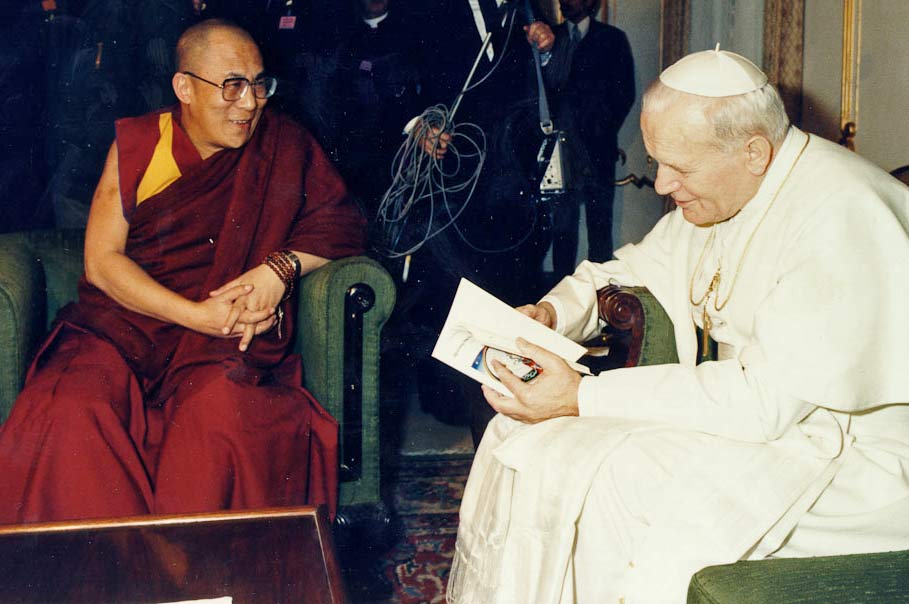
Dalai Lama with Pope John Paul

The Dalai Lama with Pope John Paul II, Vatican City, June 14, 1988. (Photo: www.dalailama.com)

Last week His Holiness the Dalai Lama participated in the Nobel Peace Prize Summit in Rome, which had initially been scheduled to take place in South Africa. This plan was scrapped after the South African government failed to grant His Holiness a visa under Chinese pressure.

His Holiness was very much welcomed in Rome where the audience gave him a standing ovation at the venue of the Summit.

At the same time, in what was the biggest public relations failure by Papa Bergoglio since he ascended to the seat of San Pietro in Rome in 2013, the Vatican did not grant to His Holiness a meeting. Instead he issued a public statement saying that the Pope holds the Dalai Lama “in very high regard”, in a recognition of the high opinion that hundreds of millions of Catholics all over the world have for the Tibetan spiritual leader.

So why not meet him? The answer is simple. The Chinese Government uses the “Dalai Lama card” to put pressure on all its international partners, both to put them on the defensive (typical behavior of aggressive negotiators) and most importantly because it fears that the moral authority and legitimacy that His Holiness has gained worldwide might be transformed in pressure to implement much-needed political reforms in China and Tibet.

Contrary to China’s calculations – betting that isolating him politically will resolve the Tibetan question – the Dalai Lama anticipated China’s aggressive campaign by voluntarily and willingly choosing to abdicate his political authority in 2011. This, among other long-term factors, including China’s bullying, has not undermined, but rather increased the popularity in the west of the 14th Dalai Lama.

With this decision and a step forward to dedicate himself to promote peace and interreligious dialogue, the Dalai Lama had hoped to facilitate a meaningful political dialogue between the Tibetan and the Chinese sides. Unfortunately, China continues to act aggressively, hoping that the problems in Tibet will be solved through their current policies.

Certainly, as a Tibetan, the Dalai Lama remains concerned with the deterioration of human rights and individual freedoms in Tibet, but it must also be noted that the he tries all the time to highlight potential positive developments that are taking place in China. Furthermore, in regards to the foreign leaders who have stopped meeting him in Europe, he continues to repeat that he does not want to create any inconvenience to the countries that are eager to make business or have good relations with China. The problem is, clearly, what kind of long-term relations can be established with an authoritarian country that does not apply the rule of law and whose judicial system is highly corrupt?

With this in mind, the way China continues to pressure everybody in the world not to meet His Holiness tells us a lot on how insecure Beijing is about its policies in Tibet, and shows its failure to grow as a responsible partner for democratic governments on the world scene. Getting away with bullying the Tibetans is only going to encourage the hardliners in Beijing to do this on other issues and to other peoples and countries.

For Pope Francis, who has courageously challenged the Vatican bureaucracy on many fronts (from its shadowy finances to the cover up of sexual abuses within the Church, from a renewed dialogue with Muslims and the Russian Orthodox to recommit the Church to help the poor and shelve luxury living styles), to give up on the promotion of interreligious dialogue with the Dalai Lama is a striking contradiction with what he has been preaching from the pulpit.

While tactically this move might bring some benefits to the Vatican in its dealing with China – the Vatican has been trying hard for decades to establish diplomatic relations with Beijing and the Chinese Foreign Ministry had a positive comment in response to the – this choice makes clear that the promotion of religious freedom for all in China is not a priority for this papacy. This is a stain that will not fade until urgent remedial measures are taken.

Matteo

Matteo

The Dalai Lama and 25 years after the Nobel Peace Prize

On December 10, 2014, lovers of peace, friends, well-wishers and followers of His Holiness the Dalai Lama celebrate the 25th anniversary of the bestowal of the Nobel Peace Prize to him. His Holiness is of course is in Rome to participated in the Nobel Peace Laureates Summit, which has now been relocated there.

It is a cliché to say what a difference 25 years can make. But in the case of His Holiness the Dalai Lama, these two and a half decades have indeed cemented his place as a statesman and a conscience of the world. Today, the Dalai Lama and peace/compassion have virtually become synonymous.

In 1989, I was working in Dharamsala and so was part of the collective Tibetan rejoicing of the event. We, at least I, then interpreted the prize solely in the context of Tibet, and Tibet alone. We saw this as Tibet’s day in the sun. Fast forward to 2014 and I reread His Holiness’ acceptance speech (of December 10, 1989) as well as his Nobel lecture (of December 11, 1989), and the Presentation Speech by Mr. Egil Aarvik, Chairman of the Norwegian Nobel Committee. I now have a fresh perspective of the expanse of the Dalai Lama’s impact.

His Holiness’ remarks in Oslo in 1989 appear to me as the germinating ground for the philosophy for which he has become well-known today. This includes his dialogue with the scientific community, his adherence to nonviolence, and, above all, his three main commitments: promotion of human values, promotion of religious harmony and promotion of Tibetan culture.

Let me expand.

By the very awarding of the prize to him, the Nobel Committee acknowledged the Dalai Lama as a proponent of peace and nonviolence. In his Award Presentation Speech, Mr. Egil Aarvik, Chairman of the Nobel Committee, said, “In view of this, fewer and fewer people would venture to dismiss the Dalai Lama’s philosophy as utopian: on the contrary, one would be increasingly justified in asserting that his gospel of nonviolence is the truly realistic one, with most promise for the future. And this applies not only to Tibet but to each and every conflict. The future hopes of oppressed millions are today linked to the unarmed battalions, for they will win the peace: the justice of their demands, moreover, is now so clear and the normal strength of their struggle so indomitable that they can only temporarily be halted by force of arms.”

In the Tibetan cultural context, the Dalai Lama is also referred to as Zamling Shidey Depon ( “pilot of world peace”) and he continues to be one today.

The Dalai Lama’s stress on the need for religion to have dialogue with science can also be perceived in his Nobel remarks.

In his Nobel Peace Prize Acceptance Speech on December 10, 1989, the Dalai Lama said, “With the ever growing impact of science on our lives, religion and spirituality have a greater role to play reminding us of our humanity. There is no contradiction between the two. Each gives us valuable insights into the other. Both science and the teachings of the Buddha tell us of the fundamental unity of all things. This understanding is crucial if we are to take positive and decisive action on the pressing global concern with the environment.”

Today, the Dalai Lama has established a strong foundation for dialogue between religion and science through the Mind & Life initiative. In the process, he has had an impact on the thinking of the scientific community, particularly those working in the field of neuroscience, through his sharing of the Buddhist perspective.

I also want to believe that through his Nobel remarks, the Dalai Lama was also crystalizing his now well-known three commitments.

His Holiness began his Nobel lecture, delivered on December 11, 1989, by saying, “Thinking over what I might say today, I decided to share with you some of my thoughts concerning the common problems all of us face as members of the human family. Because we all share this small planet earth, we have to learn to live in harmony and peace with each other and with nature.”

He continued, “The realisation that we are all basically the same human beings, who seek happiness and try to avoid suffering, is very helpful in developing a sense of brotherhood and sisterhood; a warm feeling of love and compassion for others. This, in turn, is essential if we are to survive in this ever shrinking world we live in. For if we each selfishly pursue only what we believe to be in our own interest, without caring about the needs of others, we not only may end up harming others but also ourselves.”

In another words, His Holiness was stressing on the fundamental human values that all human beings share.

The Dalai Lama was addressing the issue of religious harmony when he said in the same lecture, “As a Buddhist monk, my concern extends to all members of the human family and, indeed, to all sentient beings who suffer. I believe all suffering is caused by ignorance. People inflict pain on others in the selfish pursuit of their happiness or satisfaction. Yet true happiness comes from a sense of brotherhood and sisterhood. We need to cultivate a universal responsibility for one another and the planet we share. Although I have found my own Buddhist religion helpful in generating love and com-passion, even for those we consider our enemies, I am convinced that everyone can develop a good heart and a sense of universal responsibility with or without religion.”

As for Tibet, the Dalai Lama said this in December 1989, “The awarding of the Nobel Prize to me, a simple monk from faraway Tibet, here in Norway, also fills us Tibetans with hope. It means, despite the fact that we have not drawn attention to our plight by means of violence, we have not been forgotten. It also means that the values we cherish, in particular our respect for all forms of life and the belief in the power of truth, are today recognised and encouraged. It is also a tribute to my mentor, Mahatma Gandhi, whose example is an inspiration to so many of us. This year’s award is an indication that this sense of universal responsibility is developing. I am deeply touched by the sincere concern shown by so many people in this part of the world for the suffering of the people of Tibet. That is a source of hope not only for us Tibetans, but for all oppressed people.”

So, 25 years later what is the lesson that we can take from the bestowal of the Nobel Prize to the Dalai Lama. I can only repeat what the Nobel Committee Chairman said in 1989, “ In awarding the Peace Prize to H.H. the Dalai Lama we affirm our unstinting support for his work for peace, and for the unarmed masses on the march in many lands for liberty, peace and human dignity.”